
SIX ACUPRESSURE POINTS YOUR FACE NEEDS EVERY MORNING
Three minutes, using nothing but your fingers.
A simple practice rooted in Traditional Chinese Medicine.
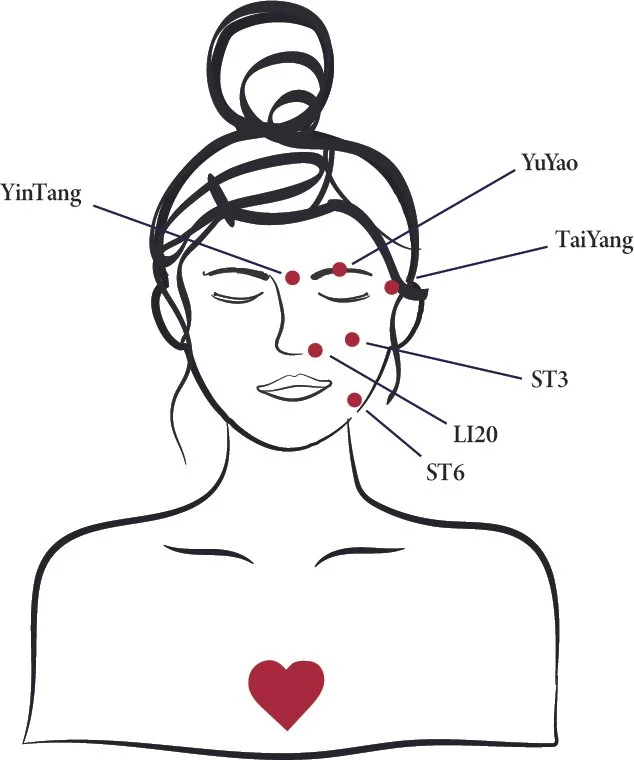
When you wake up with puffiness under the eyes, along the jaw, even between the brows… a lot of this results from tension and sluggish circulation that build up overnight. These six acupressure points are specific spots on your face where pressing for a few seconds helps release that tension, get fluid and blood moving again, and relax the small muscles that pull your features downward when they're tight. It works as a quick reset: you're decreasing puffiness, encouraging lift, and softening the lines where your face holds stress. Traditional Chinese Medicine has mapped these points for centuries; all you need is your fingers and three minutes. It’s easy to incorporate into your routine while you let your face oil or balm soak into your skin.
The Six Points
In TCM, the face is mapped by meridian pathways: channels of qi (energy) believed to regulate circulation, fluid movement, muscle tone, and tissue health. When your qi is stagnate you can experience puffiness, lines, and uneven/dull skin
Pressing the series of acupressure points below is thought to stimulate qi movement along the meridians, which is why a few minutes of morning acupressure can be a beneficial self-care practice. Make sure to press these points on both sides of the face simultaneously (except YinTang), it increases the benefits and saves time.
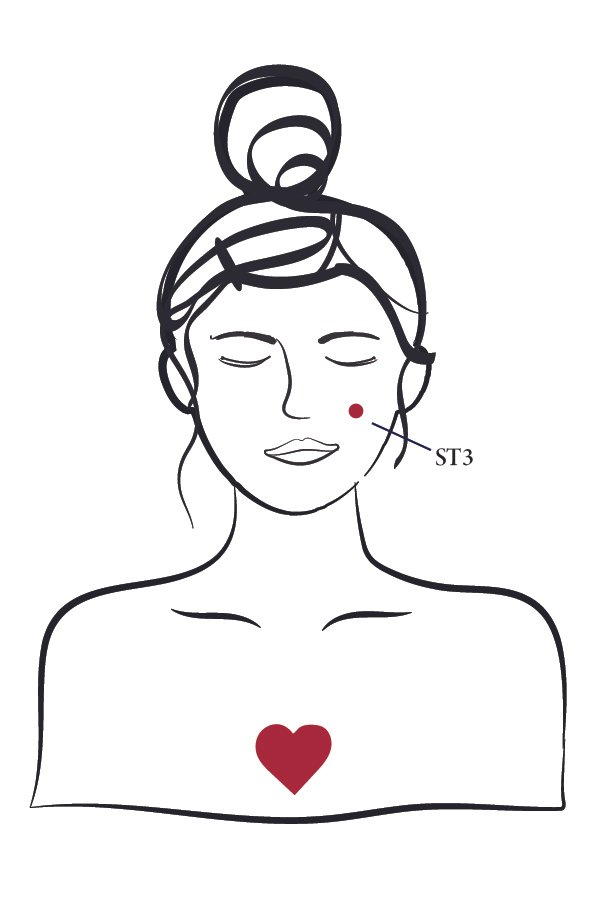
1. Stomach 3 (ST3)
巨髎 Great Bone-Hole
POSITION
Directly below the pupil, level with the lower border of the ala nasi (the outer flare of the nostril), on the outer edge of the nasolabial groove. It sits in a slight depression where the cheekbone meets the upper jaw.
BENEFITS
Drains accumulated fluid and disperses puffiness beneath the eye and across the cheekbone
Moves stagnant stomach qi that pools in the mid-face, contributing to dullness and congestion
Softens and relaxes the nasolabial groove by releasing tension held in the surrounding tissue
INSTRUCTIONS
Using one middle finger on each cheek. Apply pressure for about 30 seconds while breathing slowly.
You may experience an achiness, which means your qi is moving.
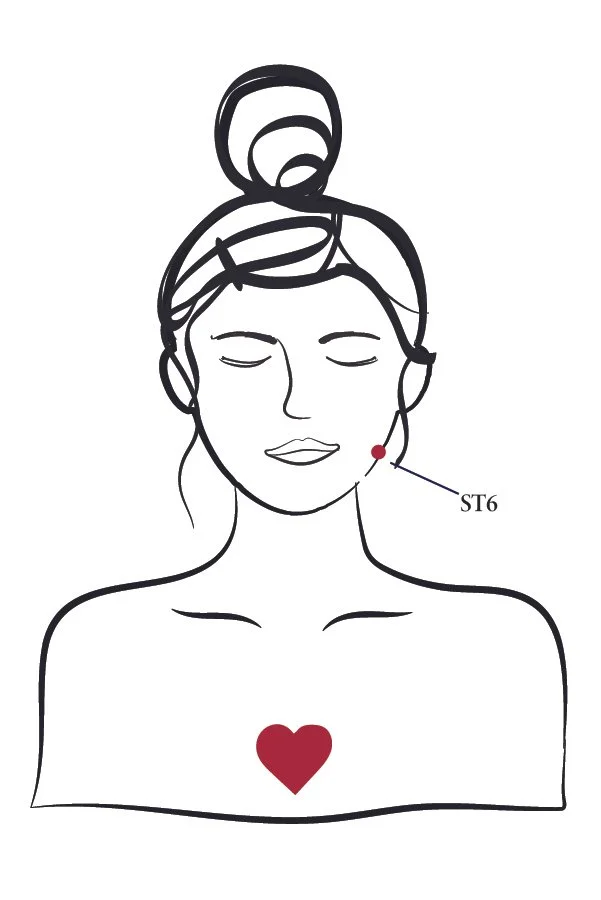
2. Stomach 6 (ST6)
頰車 Jawbone
POSITION
About one finger-width forward and up from the lower angle of the jawbone, on the bulge of the masseter muscle — the spot that rises under your fingertip when you clench your teeth and relaxes when you let go.
BENEFITS
Dissolves chronic tension locked in the masseter and jaw, where stress accumulates most visibly
Encourages definition along the jawline by improving qi and fluid circulation in the lower face
Lifts heaviness from the lower face by clearing stagnation along the stomach meridian
INSTRUCTIONS
Clench gently to find the muscle, then release. Press firmly with one middle finger on each jaw for 30–45 seconds on each side. Chronic masseter tension is a common contributor to lower-face heaviness and jowling.
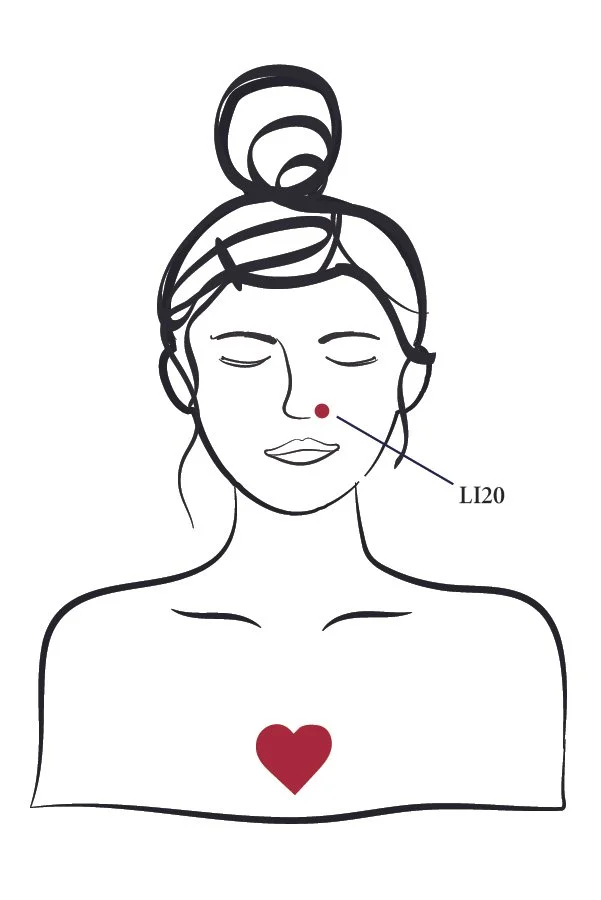
3. Large Intestine 20 (LI20)
迎香 Welcome Fragrance
POSITION
In the nasolabial groove, level with the midpoint of the outer edge of the nostril.
(Slightly lower than ST3 and closer to the nose.)
BENEFITS
Softens the nasolabial fold by releasing the levator labii and surrounding facial tissue
Moves large intestine meridian qi through the lower face, clearing the blockages that dull and congest
Disperses fluid retention around the nose and upper lip, where puffiness tends to settle overnight
INSTRUCTIONS
Use both index fingers, one beside each nostril. Press upward and slightly inward, holding for about 30 seconds. Many people notice sinus relief as a secondary benefit.
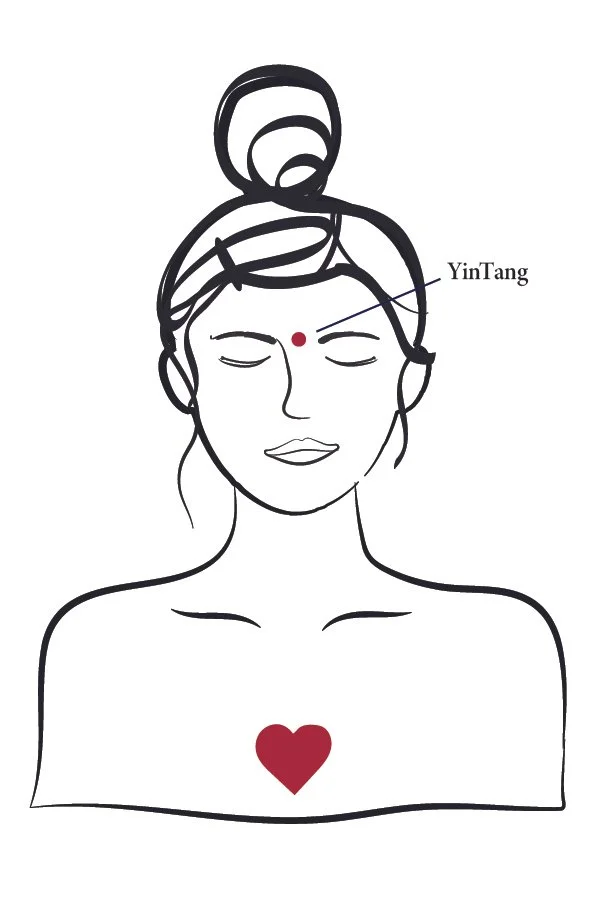
4. YinTang
印堂 Hall of the Seal
POSITION
Midway between the inner ends of the two eyebrows, at the bridge of the nose.
BENEFITS
Releases the procerus muscle, easing the horizontal creasing and heaviness that forms between the brows
Quiets sympathetic nervous system activity, unwinding the stress-driven tension that etches lines deeper over time
Settles the shen — in classical TCM, this point is said to calm the spirit, and its effect on the face is visible: a quality of looking genuinely rested rather than merely awake
INSTRUCTIONS
One finger, firm pressure angled slightly upward, for 30–45 seconds. Close your eyes. It's a naturally calming point — many people find themselves exhaling.
5. TaiYang
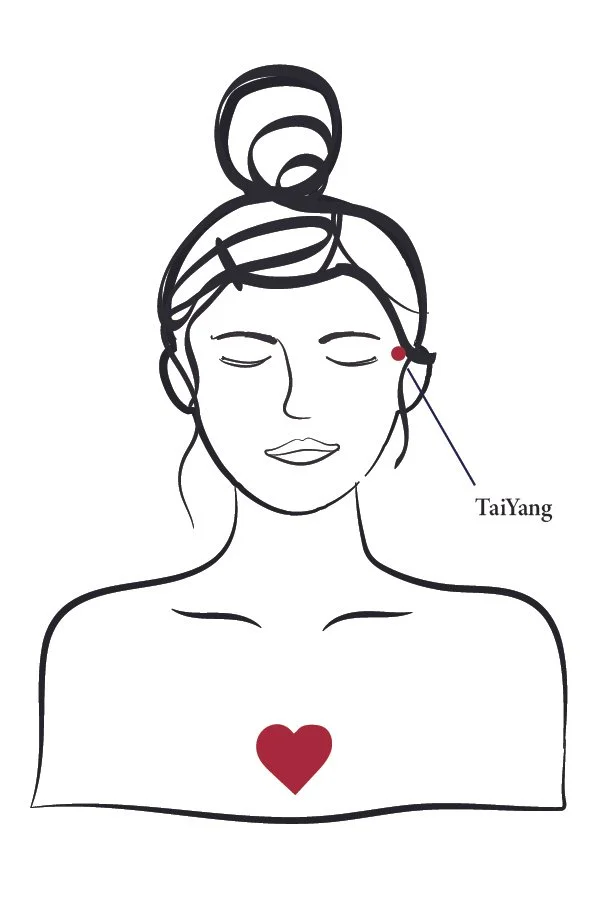
太陽 Great Sun
POSITION
In the depression about a finger-width behind the midpoint between the outer end of the eyebrow and the outer corner of the eye — the soft hollow of the temple.
BENEFITS
Releases tension held in the temporal fascia, easing the headaches and tightness that accumulate through the day
Lifts and opens the lateral brow and outer eye area by relieving the downward pull of fatigued muscle
Activates the triple warmer meridian, which governs the distribution of yang energy across the face and regulates warmth and circulation in the outer zones
INSTRUCTIONS
Use your middle fingers on both sides at once, with a light-to-medium circular motion for about 30 seconds. Chronic temple tension can quietly pull the brow down and outward — an often-overlooked cause of tired-looking eyes.
6. YuYao
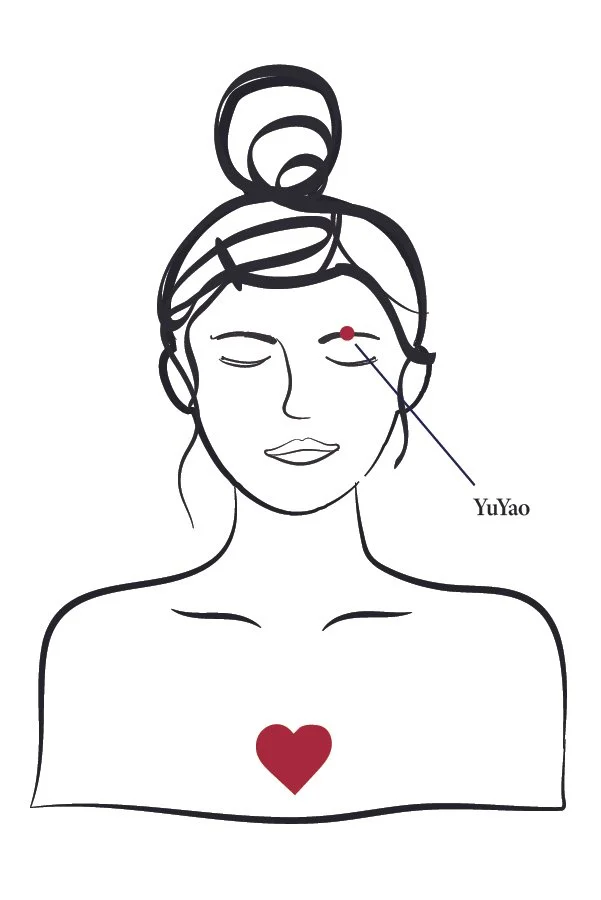
魚腰 Fish Waist
POSITION
At the midpoint of the eyebrow, directly above the pupil when looking straight ahead, in a small notch you can often feel along the brow ridge.
BENEFITS
Relieves the deep eye strain that travels upward, creating the tight, contracted brow of a long day
Lifts the mid-brow by softening the frontalis and orbicularis oculi — the muscles most responsible for the furrowed, heavy-lidded look
Clears upper eyelid heaviness by encouraging qi and fluid movement through the dense network of tissue surrounding the eye
INSTRUCTIONS
Find the exact center of your brow, above the pupil. Using one middle finger above each brow, press upward and firmly with your middle finger, angling slightly toward the bone. Hold 45–60 seconds on each side.
How long? How often?
Three minutes every morning. Be gentle and consistent:
7 days = less puffiness; more defined jaw
4-6 weeks = nasolabial softens; brow starts to lift
3+ months = skin tone is more even; lines soften
Ongoing = more relaxed + even appearance
